Angkor Wat Travel Guide | Everything You Need to Know Before Your Visit
7 min read

How Many Days to Visit, Entrance Fees, and Itinerary Suggestions

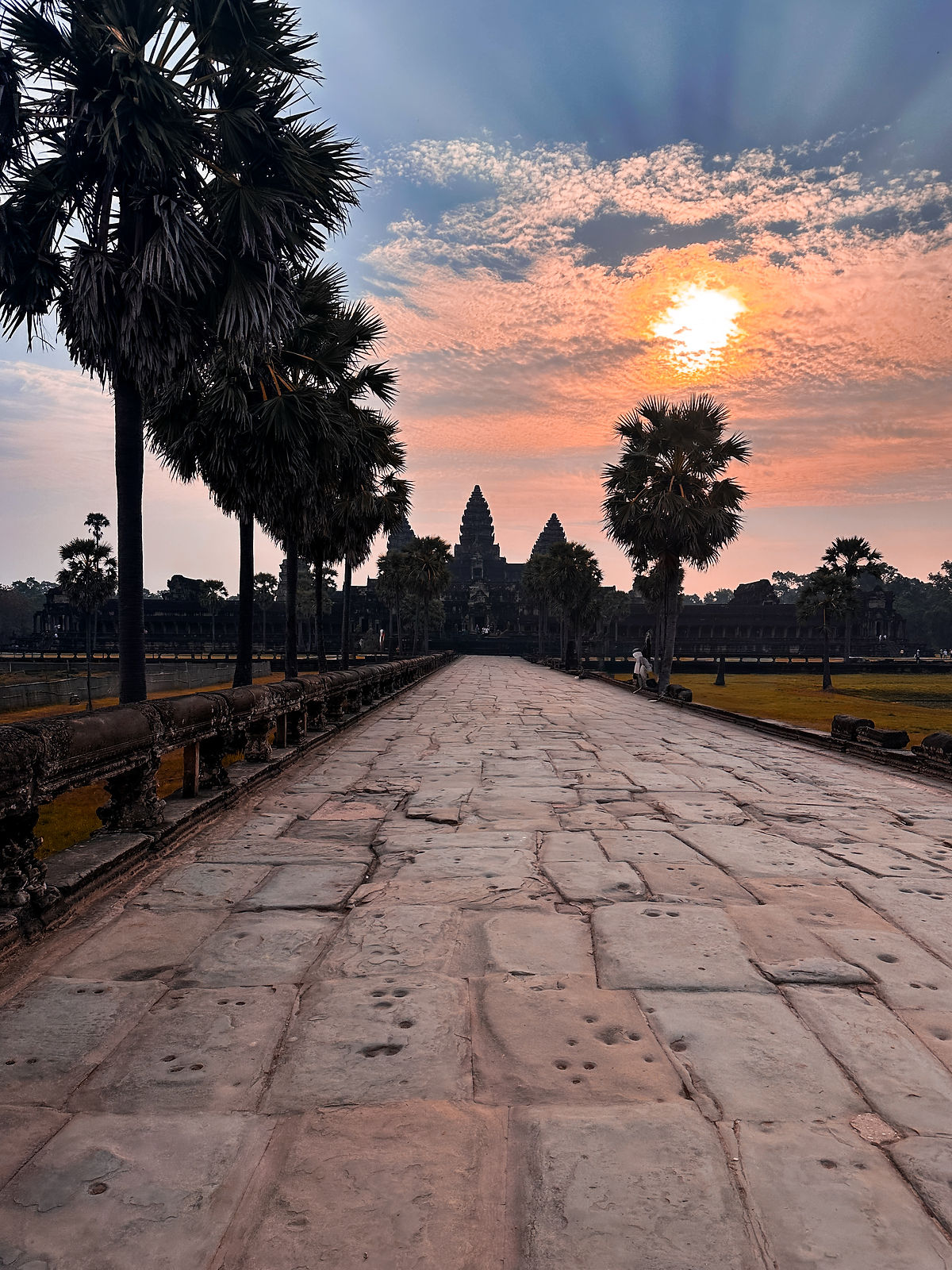
There are some places in the world that, even if you've seen their photos hundreds of times, still manage to amaze you the first time you see them. Angkor Wat is exactly such a place. Located in northern Cambodia, near Siem Reap, this colossal temple complex is more than just a structure; it's the legacy of the Khmer Empire, once one of the most powerful civilizations in Southeast Asia. At sunrise, its towers appear as a black silhouette against the sky, and in the afternoon, its stone walls turn golden. These temples offer visitors not just a sightseeing trip, but a journey through time. Rising from the jungle, hundreds of temples, miles of reliefs, and mysterious stone faces fill this area, which is now a UNESCO World Heritage site and attracts millions of visitors every year.
Where is Angkor Wat?
Angkor Wat is a massive temple complex located in Siem Reap in northern Cambodia, and is considered the world's largest religious structure.
Once the capital of the Khmer Empire, this area is now a vast archaeological park where hundreds of temples rise from the forests. You don't come here just to see a temple; you enter the heart of a civilization.
Angkor Wat was built in the 12th century by the Khmer King Suryavarman II. Initially dedicated to the Hindu god Vishnu, the temple gradually transformed into a Buddhist place of worship.
The complex is so large that it covers an area of 4 km². It is considered the largest religious structure in the world, and its wall reliefs stretch for kilometers.
How to get to Angkor Wat?
Siem Reap has no direct long-haul flights, so you'll connect through a regional hub. The easiest route is: Istanbul Bangkok / Singapore Siem Reap
Alternatively (my suggestion): Istanbul MalaysiaSiem Reap
From Siem Reap city centre it takes about 15-20 minutes to reach the Angkor temples. (Note that the new airport is 45 km out of town, so budget separately for that transfer.)
The most common transportation options for visiting the temples are:
- Tuk-tuk rental
- bicycle
- scooter
- private vehicle + guide
The vast majority of travelers take a full-day tour by tuk-tuk.
Angkor Wat Entrance Fees
There is a single ticket system for the Angkor temples; you buy tickets directly from their website.
- 1-day ticket:37 USD
- 3-day ticket:62 USD
- 7-day ticket:72 USD
Tickets are valid for Angkor Archaeological Park.
Important note: When checking tickets, they scan the QR code on the ticket. You can also visit other temples within the complex by showing this ticket. Your ticket is valid between 05:00 and 17:30.

Best Time to Visit Angkor Wat
The most popular experience is definitely watching the sunrise.
Imagine hundreds of people waiting by the pool in front of the temple around 5:00 a.m. As the sun rises, the towers of Angkor Wat are drawn like a black silhouette against the sky.
From a photographic perspective, the most classic shot was taken here.
But a little tip: the crowds start to disperse after sunrise, but the view gets even better as you climb higher up the hill between 6 and 7 a.m.
The best time to visit Angkor Wat is generally considered to be between November and February, as this is one of Cambodia's two seasons, known as the "dry season." During this period, the weather is cooler and the chance of rain is lower. It's important to wear comfortable shoes, carry plenty of water, and, as per temple regulations, wear clothing that covers the shoulders and knees when touring the temples.
Another peak tourist season is during the equinoxes, because at the equinox the sun rises precisely from the center of the domes, and many photographers come to Cambodia during this time to capture this spectacle.
How many days are needed to visit Angkor Wat?
Angkor Wat is not actually just a single temple. Angkor Archaeological Park, a vast archaeological site containing hundreds of temples, stretches over many kilometers. Therefore, it is generally recommended to allocate at least two days to explore the area.
The complex contains many important structures worth seeing. Ta Prohm, where giant tree roots wrap around the temple walls , Bayon Temple, famous for its four-sided stone facade, and Angkor Thom,the former capital, are among the most striking points of the region. These temples showcase some of the most impressive examples of Khmer architecture and art.
Among the most popular routes are the " Small Circuit" and the " Grand Circuit." These routes allow visitors to see the most important temples in the region.
Ideal duration:2–3 days
Proposed plan:
Day 1
- Angkor Wat
- Angkor Thom
- Bayon
Day 2
- Ta Prohm
- Banteay Kdei
- Pre-Rup sunset

The best time to explore the temple's inner galleries and intricate stone reliefs begins after sunrise. The temple is famous for its sunrise ritual as well as its reliefs; you'll see unique details on every wall as you explore. Guides are available inside to explain the stories behind the reliefs and provide information about the temple; you can arrange a tour with them and learn the detailed history of the temple and the Khmer people's past.


The Best Route to Visit Angkor Wat
Everyone faces the same problem when visiting temples: Where to begin?
The two most common routes are:
Small Circuit (as we experienced)
- Angkor Wat
- Ta Prohm
- Bayon
- Angkor Thom
Grand Circuit
- Preah Khan
- Neak Pean
- East Mebon
- Pre Rup
Is it a good idea to visit Angkor Wat by tuk-tuk?
Absolutely logical. We booked a tuktuk for a full-day sightseeing tour ( small circuit) for $25. You'll see many tuktuks and tour vehicles around. Don't worry about which one to choose; most offer the same price. I'm leaving the contact information for our tuktuk driver, Tiger, with whom we had a great time: his name is Tiger, his number is (+85593389779) (he gave me permission to write his number). You can contact him and travel without worrying about transportation. If you ever go, send him lots of greetings from Turkey. He picked us up from in front of our hotel at 4:30 and first took us to Angkor Wat. After visiting Angkor Wat at 5 pm, Tiger took us to Anghor Thom, Bayon Temple, Ta Prohm, and finally dropped us off at our hotel. Because the vehicle is open, you can feel the wind blowing, and it feels free, like riding a motorbike. Renting a motorbike for the day is very popular in these areas; many travelers go around with their own motorbikes, but a tuktuk is a fantastic option for seeing the surroundings.

Things you should know when visiting Angkor Wat.
Go very early in the morning, before the midday heat sets in (entry starts at 05:00)
The weather may be extremely hot and humid.
Comfortable shoes are a must
Clothing that covers the shoulders and knees is needed.
Carry plenty of water

Sunrise Experience at Angkor Wat
Almost everyone who visits Angkor Wat has the same question in mind: “Is the sunrise really that special?” Yes. But it’s hard to tell from photos. Because it’s not just about the sun rising, it’s about the atmosphere of that moment.
In Siem Reap, life slowly begins to stir while it's still dark, usually around 4:30 AM. Tuk-tuks wait in front of the hotels, and the narrow streets fill with sleepy travelers. Everyone has the same goal: to see Angkor Watat sunrise. Waking up to an alarm on vacation felt like being called on guard duty, and I kept wondering if it would really be worth it, but it absolutely was.
It's still dark when you reach the temple entrance. People are slowly making their way inside, using the flashlights from their phones. After a few minutes' walk, the famous silhouette of Angkor Wat appears before you. The towers are drawn like black shadows in the sky.
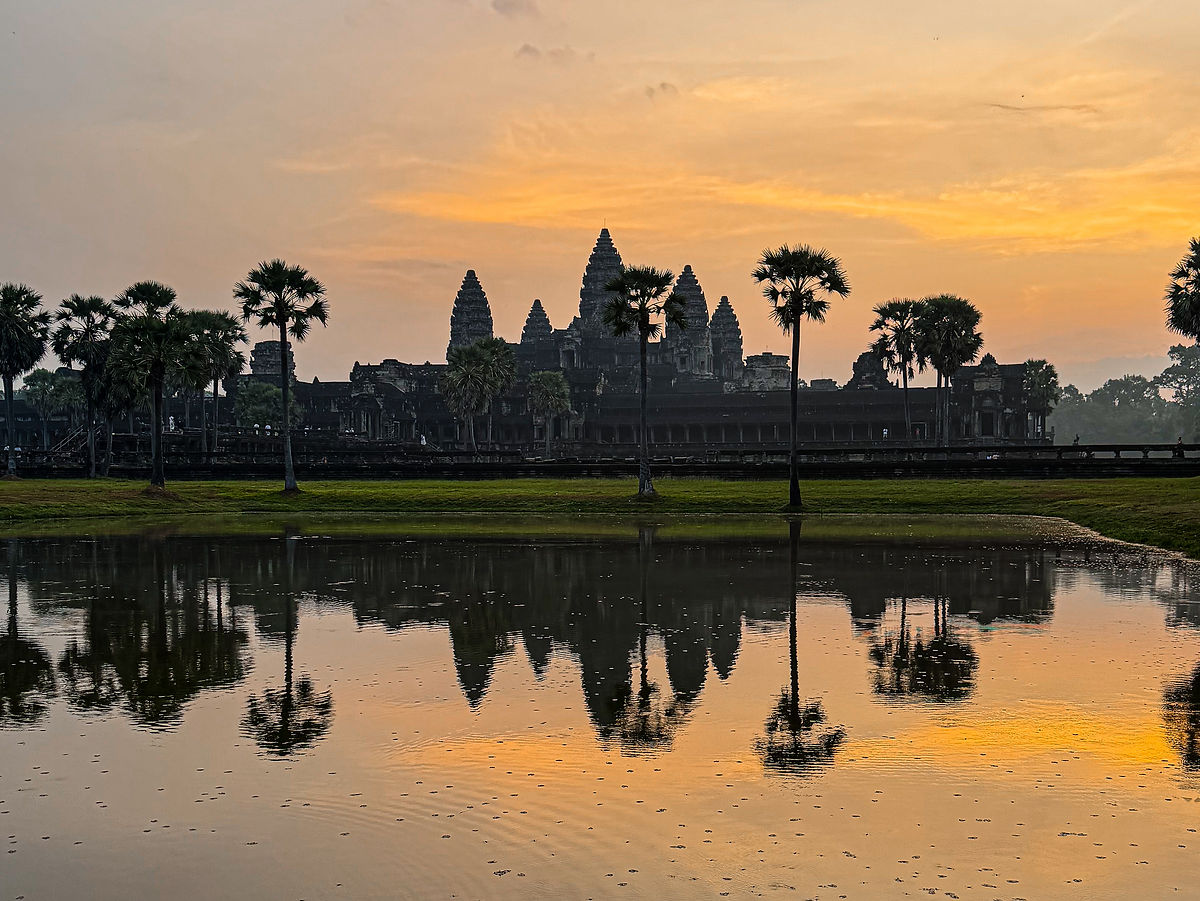
Most people head straight to the small pond (on the right) in front of the temple. This is the classic photo spot where the towers of Angkor Wat are reflected in the water. The crowd gradually increases, but it's not as noisy as you might expect. Everyone quietly watches the sky change color.
First, a very faint light appears on the horizon. Then the sky turns to shades of purple, orange, and pink. As the sun rises, the towers of Angkor Wat gradually begin to reveal their details from a dark silhouette. Within minutes, the color of the stone walls turns to golden hues.
At that moment, you realize you're standing in front of this massive temple, built a thousand years ago. This place, once the heart of the Khmer Empire, feels as if it's coming back to life with the first rays of dawn.
After sunrise, most visitors enter the temple and begin their tours with guides. We were so engrossed in watching the sky that we sat on the grass and watched the sun rise until 6 or 7 o'clock. You feel how powerful and miraculous the beginning of a new day is.
If you're planning on watching the sunrise at Angkor Wat, here's a little tip: go early, preferably around 5:00 AM. Bring water with you and don't be fooled by the cool morning air; it gets quite hot as the sun rises.
In short, watching the sunrise at Angkor Wat is not just a sight, it's an experience.
Which is more beautiful at Angkor Wat: sunrise or sunset?
Sunrise:The most iconic view. Photos of the temple's silhouette and reflection. The best spot for sunrise is again the ponds in front of Angkor Wat, especially the one on the right.
Sunset:It's less crowded, but the view is generally seen from the hills.

1. North & South Libraries
You'll pass by these two libraries when entering Angkor Wat. You can capture the perfect Instagram photo from these spots.
2. Path to Angkor Wat
You shouldn't miss this path leading to Angkor Wat. It's much quieter than the main rocky trail and ideal for photography.
3. North Reflection Pond
This is probably the most iconic location for photography in Angkor Wat.
4. Terrace of Honor
This spot, not yet discovered by many, has become my favorite. Play with the perspective, and you might capture a magnificent shot of Angkor Wat.
5. Eastern Wall
The eastern wall of Angkor Wat is a great spot for photography enthusiasts, especially with its detailed reliefs and dramatic lighting angles
6. Victory Gate
Angkor Wat and Angkor Thom are must-see attractions on this tour. It's ideal for photographing the historical architecture and massive stonework.
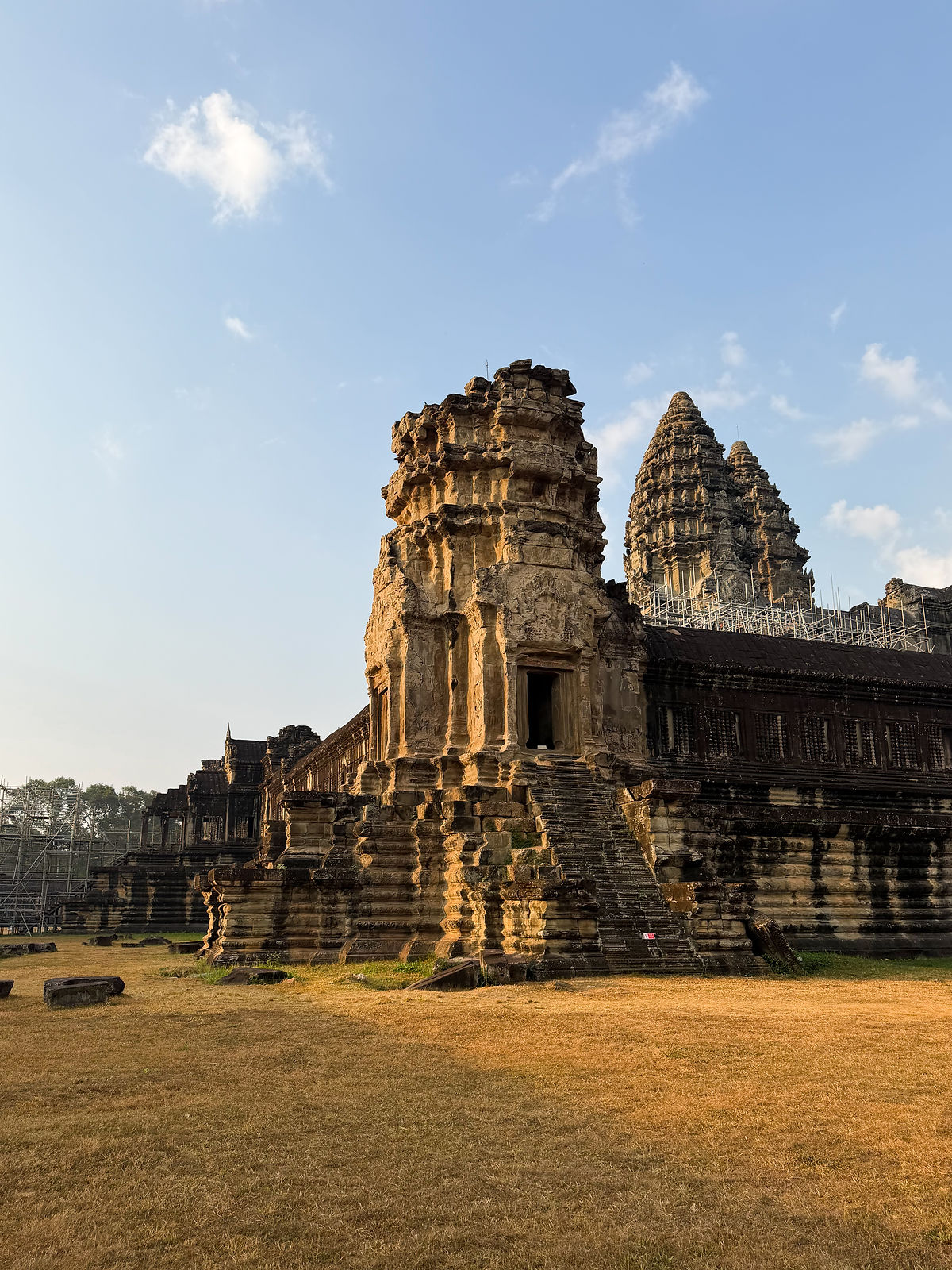
Angkor Wat is more than just a tourist destination. It's a city that was once the heart of one of the world's most powerful empires. Stone towers rising from the forest, miles of reliefs, and temple silhouettes emerging from the morning mist…
Walking around here, only one thought crosses one's mind: