Places to Visit in Tbilisi: Travel Route
18 min read

GEORGIA TRAVEL GUIDE
Tbilisi, a capital city nestled on both banks of the Kura River, captivates with both its historical and modern aspects. The city lies at the intersection of East and West, a route steeped in history and culture.
Tbilisi's Georgian name is "Tbilisi," meaning warm water . Legend has it that the city was founded in the 5th century AD when, during a hunt, the King's hawk landed on a spot with hot springs. The King was so impressed by the place that he ordered the construction of a city there. He named the city “Tbilisi,” from the word "Tbili," meaning "warm."
Art and culture are essential parts of Tbilisi. You can find a gallery, theater, or music event on every corner. The Gabriadze Theater's fairytale-like clock tower and puppet shows, in particular, add a unique character to the city. Tbilisi hosts numerous events throughout the year and attracts culture enthusiasts with its International Film Festival held in October.
In short, Tbilisi is one of the coolest cities in the Caucasus. Starting your Georgia trip here is definitely the most logical choice! ✨

The Best Things to Do in Tbilisi 🌟
Two days is sufficient to explore Tbilisi. You can roughly divide the city into four areas: the Old Town, located on the lower Kura River, which flows through the city center; the areas along Rustaveli Avenue; and the Avlabari and Fabrika Tbilisi districts, located on the upper Kura River.
I think the Old Town should be your first stop to explore the city. Starting here, you'll get a full picture of the city and its historical atmosphere, and Tbilisi will begin to take root in your mind. After completing your visits in the Old Town, I recommend walking up Rustaveli Avenue, the city's main street, and exploring the attractions along this route. Planning your first day this way will already cover a wide range of attractions. On your second day, you can explore the upper reaches of the Kura River and then head towards Batumi.
For centuries, Tbilisi has been a crossroads of diverse cultures and beliefs. This diversity, which has persisted from the Silk Road era to the present day, is evident in the city's fabric, cuisine, music, and most of all, its architecture. The best way to truly understand the city's spirit is to immerse yourself in its streets and explore on foot . Sometimes deliberately, sometimes aimlessly, you unravel the story of Tbilisi through these walks.
Tbilisi, unlike many European capitals, doesn't have a clearly defined "old city center." The historic district stretches along both banks of the Kura (Mtkvari) River. Within this area are the Abanotubani baths, Avlabari (the historic Armenian quarter), and Chugureti (the former German colony) . Each stands out as a distinct city, with its own distinct character and style.

- Narikala Fortress
- Abanotubani Baths (Sulfur Baths)
- Kartlis Deda (Mother of Georgia)
- Old Houses & Italian Courtyards
- Meidan Bazaar
- Sioni Cathedral (Sioni Church)
- Mtatsminda Park
- Sameba Cathedral
- Tbilisi History Museum / Karvasla Museum
- Betlemi Church and Streets
- Jan Shardeni Street and Cotton Row
- Orbeliani Baths and Surroundings
Old Town
One of the best places to start exploring Tbilisi is definitely the Old Town . Narrow streets, colorful balconied houses, small cafes… Every step you take feels like you've traveled back to another century.
You can start your tour at the Meidan Bazaar, where you can find souvenirs and explore Georgian handicrafts. Then, stroll to the Sioni Cathedral; both its interior and exterior architecture offer a captivating experience. Right next to the cathedral is the Tbilisi History Museum (Karvasla Museum), which you can also explore for a brief journey into the history of old Tbilisi.
Then, explore Cotton Row and Jan Shardeni streets step by step. This walk will thoroughly familiarize you with the city's texture and the vibrant atmosphere of the Old Town. During the walk, you can climb Betlemi Street to Narikala Fortress and admire Tbilisi from above. The view is truly breathtaking!
After your tour of the fortress, head to the Orbeliani Sulfur Baths and explore them. Then, head up the hill to the Kartlis Deda Statue, a symbol of Tbilisi. The statue offers a magnificent perspective of the city and is a perfect photo spot. Don't forget to visit the nearby Tbilisi Fire Temple.
The part of Tbilisi most associated with the "Old City" is the Kala, or "Castle" district. Located at the foot of Narikala Fortress, this district was once surrounded by city walls. With its narrow streets leading east from Freedom Square to the river, its wooden balconies, old courtyards, and crumbling yet still charming houses, it offers a true fairytale atmosphere.
Once you've covered the main attractions in Old Town, you can head to Freedom Square and Rustaveli Avenue . This is a great place to experience the modern side of Tbilisi and its city life.


Freedom Square
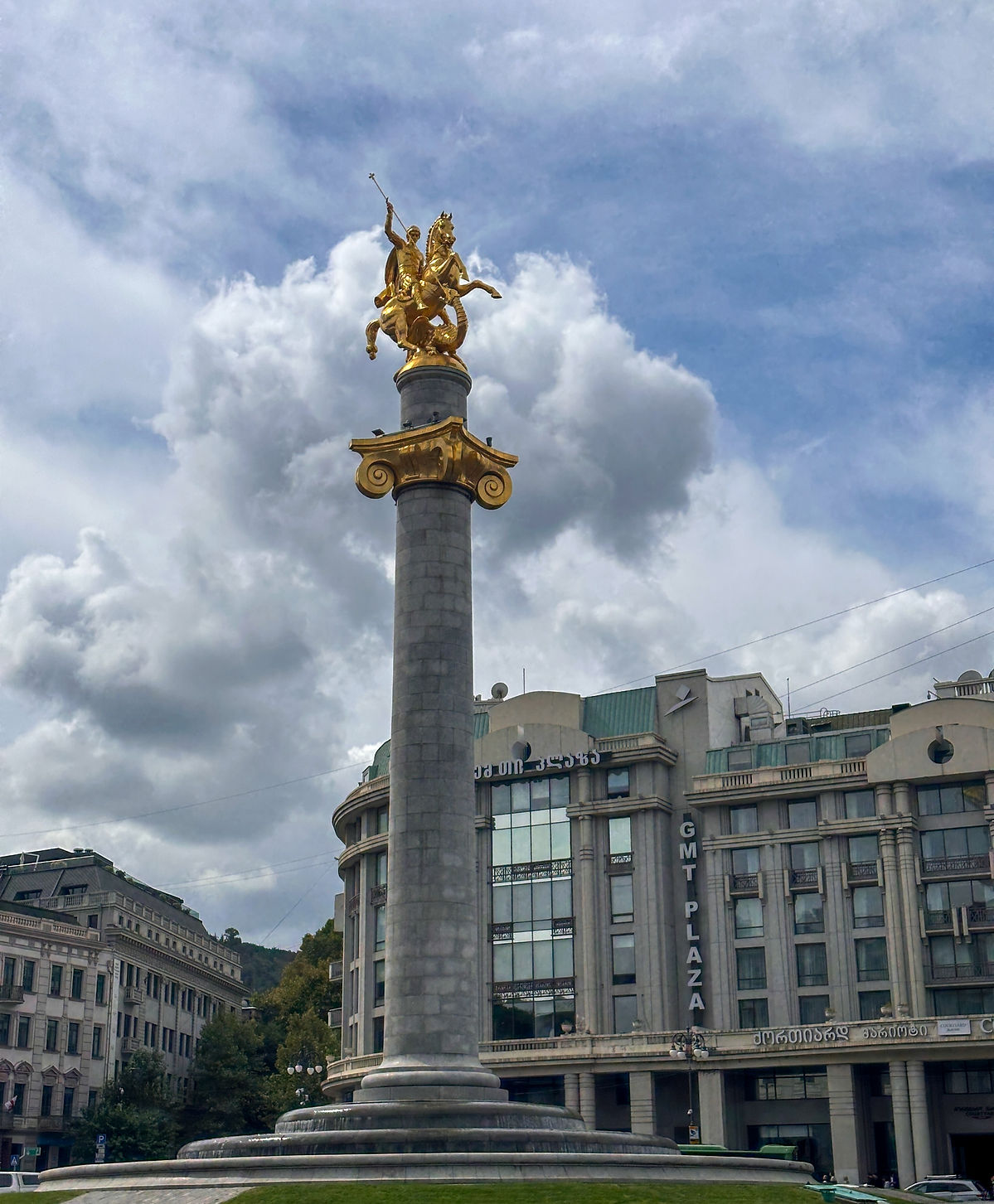
Freedom Square, which can be considered the heart of Tbilisi, is one of the city's main meeting points. Upon entering the square, you'll be greeted by the statue of King Vakhtang Gorgasali, rising from the center; this statue, a tribute to Tbilisi's founder, is interesting both historically and photographically. The square is also surrounded by cafes, shops, and important public buildings; you can observe the city's modern and vibrant face during a walk. If you need a short break, Pushkin Park, located northeast of the square, is a wonderful resting spot. Surrounded by trees, flowers, and benches, it offers an ideal spot for admiring the city's views and planning the rest of your trip. The combination of square and park is a perfect stop to experience both the history and daily life of Tbilisi.
The Sololaki district, located southwest of Freedom Square, is a true architectural paradise. With its more structured street plan, magnificent facades, and elegant, yet somewhat tired buildings found on every corner, it's a special spot, especially for photography enthusiasts. The interiors of some buildings are as impressive as the exteriors. If you're lucky, you might even catch a glimpse of the ornate stairwells and mosaic details.
📍 Favorite streets:
- L. Asatiani Street
- A. Tbileli Street
- G. Kikodze Street
- Vertskhli Street (Silver Street)
- D. Chonkadze Street
- I. Machabeli Street
Rustaveli Avenue
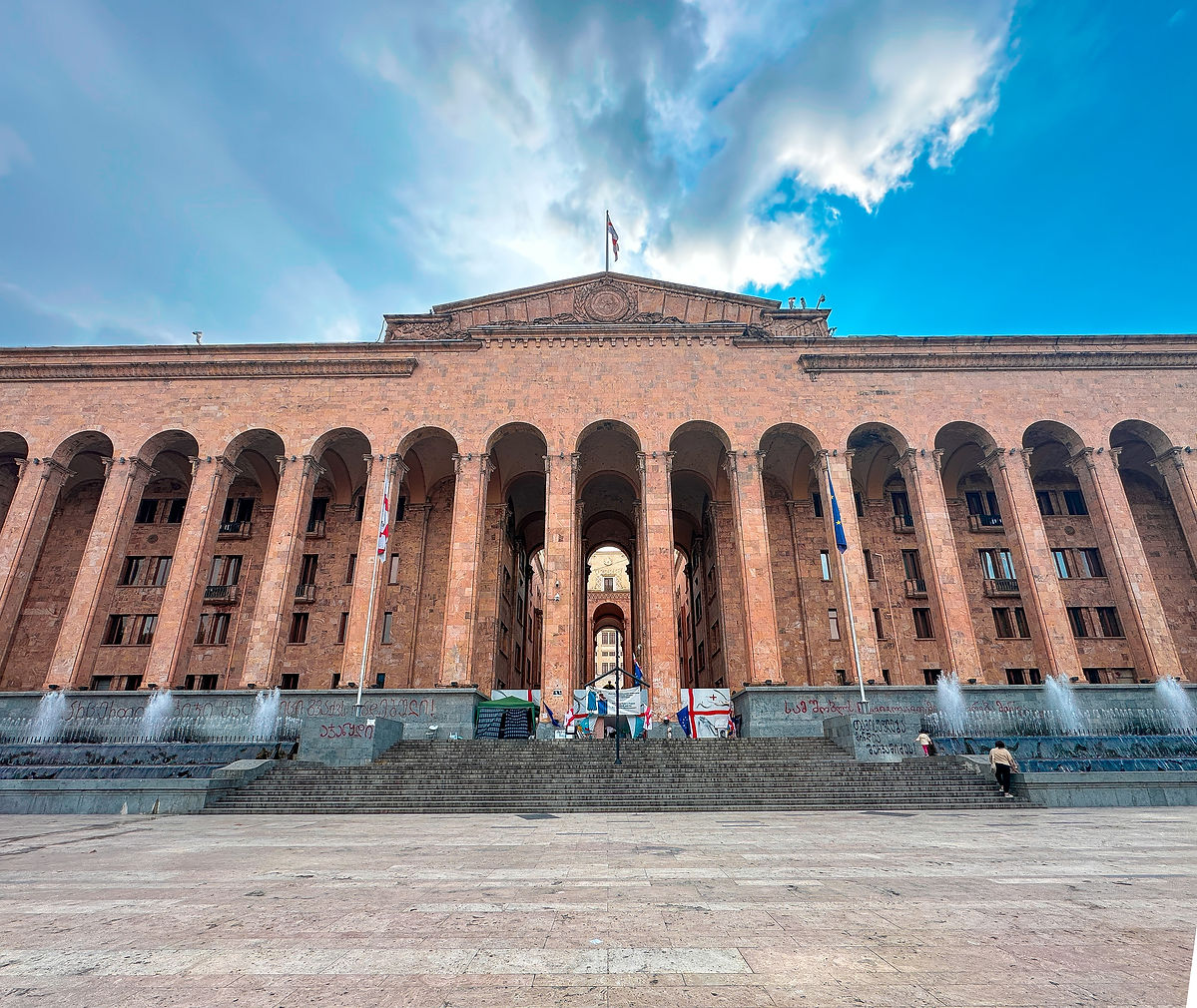
After a short break in Pushkin Park, you can continue exploring Rustaveli Avenue on foot. In about a 30-minute walk, you can see both Tbilisi's important public buildings and cultural landmarks along the avenue. Iconic structures such as the Parliament Building, the Theater, and the Opera House are along your route. You'll also find many upscale restaurants and cafes along the avenue; this area of Tbilisi could be compared to Nişantaşı in Istanbul. During your visit, you can choose a restaurant that suits your taste and experience the avenue to capture the modern face of Tbilisi.
As you continue down the street, you'll see MoMA Tbilisi; a worthwhile stop for modern art enthusiasts. After finishing Rustaveli Avenue, a short walk takes you to Dry Bridge Market . This is one of the city's most vibrant spots; wandering among the antiques, handmade jewelry, and interesting souvenirs is a delight. With cafes, theaters, art galleries, and shops lining the street, Rustaveli Avenue truly stands out as Tbilisi's cultural and artistic hub.
MoMA Tbilisi was founded by the late Georgian sculptor Zurab Tsereteli in 2012 to showcase his own work. The museum's most striking piece, "The Apple of Love," is a 9-meter-tall hollow sculpture that appears quite mysterious from the outside. Entering through a small door, 145 bronze relief panels depict the origins of life and Tsereteli's creative world.
Tbilisi Opera and Ballet Theatre & Academy of Arts
As you stroll along Rustaveli Avenue, you'll see the Tbilisi Opera and Ballet Theatre, one of Georgia's oldest and most established artistic institutions. Founded in 1851, the theatre is the heart of the city's cultural life. Designed in 1896 by German architect Victor Schroter, its golden-maroon neo-Moorish façade and magnificent interior design offer a unique blend of European and Eastern aesthetics. International ballets are performed throughout the year; especially in the autumn and winter months, you can check the schedule and purchase tickets on TKT.GE. Prices start from just 10 GEL. Seeing a world-renowned Georgian national ballet troupe like Sukhishvili is also an unforgettable experience.
After the theater, explore the long staircase leading to Griboyedov Street on the west side of Rustaveli Avenue. Each step is adorned with beautiful hand-painted tiles; patterns and excerpts from Georgian epics await you along the street. At the top of the stairs rises the main building of the Tbilisi State Academy of Arts . Built in the late 19th century, the building was formerly owned by the Armenian merchant Vardan Astvatsatryan Arshakuni and donated to the city. The Academy Museum is open on weekdays; with a ticket, you can visit the most opulent rooms, including the "hall of mirrors," decorated with mosaics and miniature paintings by Persian masters.


Dry Bridge Market
Antiques from the Soviet era, old records, paintings, badges... It's like an open-air museum.
One of the must-do things in Tbilisi is a visit to the Dry Bridge Market . Its name might seem a bit strange: The bridge on which the market stands once spanned the Mtkvari River, but when the river was later filled in, it became known as the "dry" bridge. Today, it's a massive open-air market, open 7 days a week, 365 days a year (weather permitting, of course!). You'll encounter a throng of vendors here. Tables display an incredible variety of items: old war medals, retro records, KGB ID cards and gas masks, Soviet-era cameras, chandeliers, maps of the former USSR, Christmas decorations, and every other antique and vintage object you can imagine. In short, it's like a treasure hunt. Be prepared to bargain, of course; some vendors can be quite insistent on prices. At the base of the bridge and in Dedaena Park, you'll find artists exhibiting their paintings and selling handicrafts. It's like an open-air gallery.

Clock Tower & Gabriadze Theater 🎭
After visiting the antique market, we walked towards Rezo Gabriadze Square, one of Tbilisi's most visited tourist attractions, and its famous leaning clock tower. Right next to the tower is the small but striking Anchiskhati Basilica . Born in Kutaisi, Rezo Gabriadze (1936-2021) was a prolific playwright, artist, and author who, after working in the film industry, founded the Tbilisi Marionette Theater in 1981. A local institution, the theater presents live puppet shows every Tuesday through Sunday . The plays are in Georgian, with English subtitles displayed on a screen above the stage. The scenery and costumes (all Rezo Gabriadze designs) are imaginative, but this is no ordinary puppet theater. The shows are based on very mature themes (for example, the Siege of Stalingrad), and therefore the theater is open only to adults (ages 12 and over). Adjacent to the theater is the fantastical Gabriadze Universe, which includes the Tbilisi Clock Tower, built by Rezo from materials salvaged from old Tbilisi. The Gabriadze Cafe (daily from noon) serves nostalgic delights, while the Gabriadze Shop (daily from 10:00) sells hand-painted ceramics and tableware from its studio workshops. I wouldn't have missed this theater while I was in Tbilisi, but tickets were sold out until two months later, so if you're planning to go, be sure to get your tickets in advance. Tickets for the Gabriadze Theater start at 50 GEL and can be purchased online at TKT.GE.

Peace Bridge
Located at the intersection of old and new Tbilisi, this modern glass and steel bridge is particularly impressive when illuminated at night. It's impossible to pass by without taking a photo. It's one of Tbilisi's most Instagrammable spots. After seeing the Peace Bridge, we headed to Rike Park.

Rike Park
The modern architecture juxtaposed with the elegant (and sometimes slightly neglected) structures of Tbilisi's historic houses is certainly eye-catching and unusual. You can see some of the most recognizable buildings in the city's skyline from Rike Park . This riverside park stretches below the Avlabari and Sameba Cathedrals. For the best views, climb the stairs at the back of the park to Baratashvili Rise .
Completed in 2010, the Peace Bridge, designed by Italian architect Michele De Lucchi, spans the river with its curving steel and glass roof, connecting Rike to Erekle II Street in Kala. At sunset, more than 1,200 LEDs on the bridge's glass railings flash in different patterns. The futuristic Rike Concert Hall (2012) stands at the park's northern end. The State Palace of Ceremonies, formerly the Presidential Palace (2009), rises behind the concert hall. Its kitsch-style arches and glass dome are visible from the hillside.


Factory Tbilisi
A former Soviet-era sewing factory, now a hostel-turned-creative hub, it's a symbol of Tbilisi. Some see it as "the cool side of Tbilisi," while others see it as the commercialized version of subculture.
The exterior of the factory building is covered in colorful street art. Inside, it's like a large, brightly lit hall with a cafe, a restaurant, colorful Caucasian rugs, and a variety of seating options, creating a warm atmosphere.
The courtyard is just as lively as the interior. Half a dozen cafes, restaurants, bars, and boutiques are gathered here. In the evenings, the tables of all these establishments come together, creating a lively, friendly atmosphere. Film screenings, live music concerts, book fairs, and Christmas markets are also frequently held.
Today, the area is a vibrant hub filled with artists' studios, shops, and boutiques. It also boasts modern cafes and bars serving both local and international cuisine, as well as a large co-working space. The factory is open to the public. Located in the Chugureti neighborhood, it's a cultural center built in a converted former Soviet sewing factory.

🏰 Narikala Fortress
Rising high on a hill in the heart of the city, Narikala Fortress is one of Tbilisi's most iconic structures. With a history dating back to the fourth century, this fortress stands as a silent witness to the city's past. The fortress offers a prime vantage point for a bird's-eye view of the Old City, the Mtkvari River, and the surrounding hills. The view is truly captivating, especially at sunset, when the golden hues that envelop Tbilisi. You can reach Narikala by walking through the narrow streets of Old Tbilisi or by taking the cable car from Rike Park . Once at the top, you can wander freely among the ruins, climb the towers, and soak up the atmosphere of ancient Tbilisi. St. Nicholas Church, located within the fortress, is also worth a visit. If you want to experience the city's energy, the winding river, and its colorful houses all in one shot, you should definitely go to Narikala. ✨

Sulfur Baths
The name Tbilisi actually derives from these hot sulphurous waters . The Georgian word "Tbilisi" means "warm," and the city was built around these natural hot springs. When you arrive in the Abanotubani district, you'll immediately notice the domed brick structures—this is Tbilisi's famous bath district. There are nearly a dozen ancient baths, each with a unique story from the past to the present. The Gorgasali Bath and the Royal Bath House are among the most well-known. There's nothing quite like soaking in the hot water at the end of a tiring day to wash away the city's fatigue. It's one of the most unique traditions to experience in Tbilisi.


⛪ Sameba Cathedral (Holy Trinity) Cathedral
No matter where you go in Tbilisi, this magnificent structure is undeniable. Visible from every point of the city with its golden dome, Sameba Cathedral has truly made its mark on the city's skyline. This magnificent structure, especially when illuminated at night, shines brightly against the cityscape, captivating you. Sameba is one of the tallest Eastern Orthodox churches in the world. Its construction took almost a decade and was completed in 2004 with donations from the public. In this respect, it symbolizes the faith and unity of the people of Tbilisi. Located at the summit of Elia Hill, the cathedral is accessed via a walkway of stone steps. Upon entering, a dazzling atmosphere greets you: marble details on the walls, gold ornaments on the dome, and an impressive sense of height. The exterior is equally magnificent, a modern interpretation of simple yet elegant Georgian architecture. When visiting the cathedral, it's essential to observe the religious dress code, just like the locals. Women are expected to cover their heads and wear clothing that covers their shoulders and knees. Men are advised to wear long trousers instead of shorts. No trip to Tbilisi would be complete without seeing the Sameba Cathedral .


✨ Kartlis Deda(Mother of Georgia)
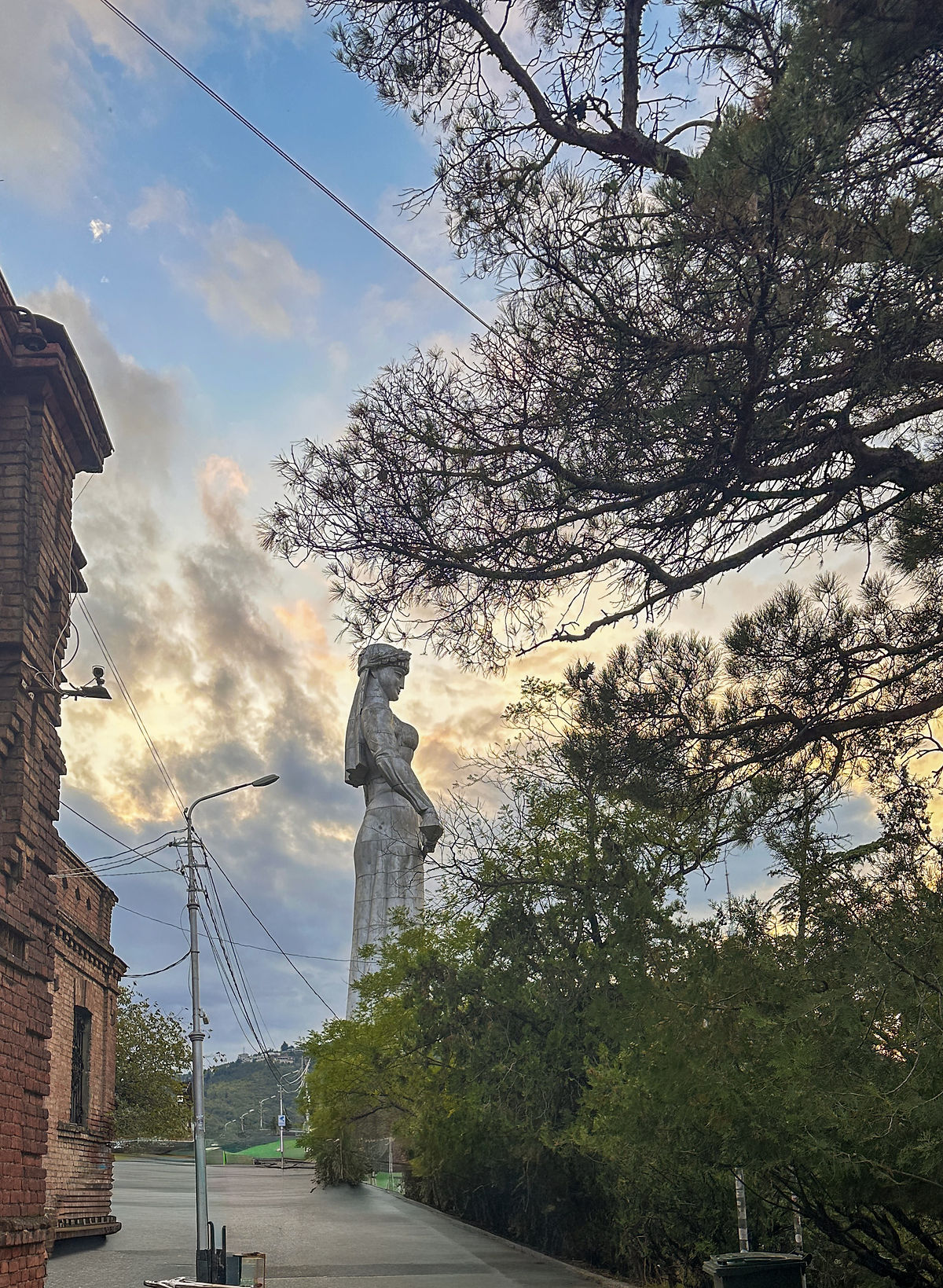
If I were to choose a single structure that symbolizes Tbilisi, it would undoubtedly be Kartlis Deda . Overlooking the city, this 20-meter-tall giant female statue perfectly embodies the character of Georgia. Holding a wine bowl in one hand, she holds a sword against her enemies, and holding it in the other, she represents two core values of the Georgian people: hospitality and freedom . Perched atop Sololaki Hill, this impressive statue, with its long robe and head-to-back robe, has become a symbol of peace, thanks to the olive branch on its forehead. Holding a sword in her right hand parallel to the ground and a wine bowl in her left hand at head height, the figure exudes both grace and strength. Designed in 1958 by Georgian sculptor Elguja Amashukeli, the first version was made of wood. A few years later, it was clad in aluminum and rebuilt in its modern form in 1997. While it carries resemblances to the Soviet era, it has remained one of Tbilisi's most iconic symbols even after Georgia gained its independence.
Seeing this powerful female figure up close on Sololaki Hill is a must-see, both for its history and its cityscape. Her appearance, especially at sunset with the lights behind her, is truly captivating.
🎡 Mtatsminda Park
If you're looking for some fun and a great view, you've got your eye on Mtatsminda Park! As you ascend by cable car, the breathtaking views of Tbilisi unfold before your eyes. Once you reach the top, you'll find classic amusement rides, walking paths, and cafes where you can enjoy a coffee while taking in the view. This amusement park, perched right at the top of the city, is a favorite among locals and visitors alike. The most enjoyable way to get there is by funicular from Chonkadze Street. The park offers a Ferris wheel, swings, and small playgrounds, offering all sorts of entertainment. But the best part is riding the giant Ferris wheel perched on the side of the hill. Unless you're afraid of heights, I highly recommend this scenic experience.
Mtatsminda's atmosphere takes on a completely different character, especially at sunset, as the city lights begin to come on. If your travel plans allow, you could dedicate a full day to this place; it's a fun spot, especially for families with children.

🔥Zoroastrian Fire Temple
Tbilisi is a melting pot of diverse traditions and beliefs . Along with Orthodox, Apostolic, and Catholic churches, there are also synagogues and a mosque. The city also boasts a Zoroastrian Fire Temple . This rare site offers a glimpse into ancient Zoroastrian traditions and fire worship rituals.
While fire worship is typically associated with Azerbaijan, one of the world's oldest religions once existed in Georgia. Ateshgah was built between the 5th and 7th centuries, during a period of intense Persian influence in the city. Having survived the 1795 invasion, the temple holds the distinction of being one of the oldest—if not the oldest—structures in Tbilisi.
The temple, a modest brick structure protected by a plastic roof, is no longer actively used. It's even housed in a private courtyard. To enter, you have to knock on the door—usually someone will let you in. Inside, you'll find a wooden model of the temple and some archival photographs .

Queen Darejan's Balcony
Located at the foot of Metekhi Rock in Tbilisi's historic district, this elegant palace commands impressive views of the city's rooftops and the banks of the Kura River. Erekle II, ruler of the Kingdom of Kartli-Kakheti, commissioned the palace in 1776 for his wife , Queen Darejan . Still standing today, the structure offers a wonderful escape for those seeking a quiet and peaceful retreat away from the crowded tourist hotspots.
You can wander the garden, take in the panoramic views, and closely examine the balconies, decorated with details from the royal era. This is a fascinating stop, especially for photography enthusiasts, in the morning light. The palace entrance is located right next to the Periszwaleba Monastery, and admission is completely free . Visiting hours are 10:00 am to 2:00 pm; however, if you visit during Sunday prayer time, you can access the balcony. The Avlabari district, where the palace is located, is known as the old Armenian quarter of Tbilisi. A few blocks from Karmir Avetaran towards Metekhi Church, you can see this historic structure. The palace was built on the ruins of the 11th-century Isani Fortress and one of Tbilisi's old city gates. Once the summer residence of Queen Darejan, the building has been recently restored, and its famous baby-blue circular balconies have been repainted. In April, the garden blooms with purple wisteria vines, creating a wonderful fragrance. Legend has it that the palace's location is known as " the land soaked in the tears of Queen Darejan " because the queen was first exiled here for her defiance of the Russian Empire and then sent to Russia. Today, the Holy Lord's Transfiguration Monastery, located within the palace, remains an active monastery. The nuns who live there sell their handcrafted embroidery and lacework in a small gift shop.

🏛️The Giant Statue of Tbilisi: Chronicles of Georgia
I'm talking about a place a bit far from the center of Tbilisi but definitely worth seeing: Chronicles of Georgia . Rising above the northern tip of Lake Tbilisi, this massive sculpture complex will make you feel like you're on the set of Avatar.
The Chronicles of Georgia was designed by renowned Georgian sculptor Zurab Tsereteli in 1985. Its purpose was to commemorate Georgia's 3,000-year statehood tradition and 2,000 years of Christian history. Unfortunately, due to lack of funds, the project was never fully completed, and some sections remain enclosed by scaffolding.
The main structure is comprised of 16 tall columns, each rising up to 35 meters. The columns are covered with copper and bronze reliefs and consist of three horizontal tiers:
- Lower floor: Biblical scenes (Noah's Ark, The Last Supper, etc.)
- Middle floor: Kings, diplomats, poets and writers from Georgian history
- Upper floor: National traditions; cultural rituals such as Rtveli grape harvesting and winemaking
Each column is like a time tunnel, revealing both Georgian history and cultural heritage. Some panels are decorated with Soviet aesthetics and feature solar and astrological symbols, adding a special mystique to the monument.

Chronicles of Georgia is a completely open-air museum and open to the public. You can visit it 24 hours a day, every day of the year. Entry is free ! To reach the top, you can take a short walk from the northern tip of Lake Tbilisi or drive. If you want to take photos in the beautiful light, arriving in the afternoon is ideal. The panoramic view of Tbilisi from the top is absolutely stunning. Behind the monument stands a small Orthodox church (Annunciation Church) . You can also admire the city from different angles from the passages above the handcrafted workshops. Looking south, you'll see a panoramic view of Lake Tbilisi, while looking the other way, you'll see a striking contrast to the concrete sea.
💡 Tip: When visiting the Chronicles of Georgia, don't just take photos and move on. Examining each column and panel carefully is like experiencing Georgian history and culture on foot.

Sharden Street and Surroundings
As evening falls, Tbilisi takes on a completely different atmosphere. Restaurants, bars, and cafes suddenly come alive; music booms in the streets, and lights sparkle. The city's energy intensifies as the night approaches. If you're particularly interested in trying Georgian wines, this is the perfect place. A different flavor, a different story awaits you around every corner.

Another striking structure is the Palace of Public Services, or the "Mushroom Building," as it's popularly known. Its name comes from its roof, which resembles a giant mushroom cap. Easily visible from Baratashvili Bridge, this building is one of Tbilisi's most distinctive modern structures. Exploring Tbilisi's contemporary architecture also means understanding modern Georgian politics. These ambitious structures in the city were often built with the vision of former leaders, and each one has its own unique story.

🏡Where to Stay in Tbilisi?
If you're visiting Tbilisi for the first time, it's recommended that you stay in the city center. My advice is to start in Sololaki or Avlabari. This way, you can experience both the city's historical atmosphere and daily life more easily.
- Sololaki: Located just southeast of Freedom Square, it exudes the spirit of Tbilisi with its historic buildings, narrow streets, and cafes.
- Lower Vera: The area around the Stamba Hotel is particularly vibrant. It's filled with stylish cafes, art galleries, and popular young people's spots. If you're looking for a more modern atmosphere, this is a great option.
- Avlabari: Located opposite the Sulphur Baths, it's quiet and peaceful, yet very close to the center.
- Chugureti (Marjanishvili or Plekhanovi): The Fabrika area is particularly popular. It has a more alternative, young, and vibrant atmosphere.
All of these areas are safe, have a great local vibe, and you'll find plenty of restaurants, cafes, and bars. So, whether you're grabbing a coffee before sightseeing or enjoying a glass of wine in the evening, you'll have everything you need at your fingertips.

Little Tips for Your Tbilisi Trip
- Get a local SIM card as soon as you arrive.
- Stay in Sololaki, Lower Vera, Avlabari, or Chugureti. These inner-city neighborhoods are the most convenient for visitors.
- Get used to "Tbilisi Time." Tbilisi is a city that wakes up a bit late; many restaurants, museums, and other places open around 10-11 a.m.
- Free walking tours, which I've previously mentioned in my Bulgaria-Sofia articles, are also very common in this city; exploring the unique culture with a local guide is incredibly rewarding. You can find tours at times that suit you by clicking the link .

1. How many days should I stay in Tbilisi?
It's ideal to spend at least two or three days exploring Tbilisi. If you stay longer, you can take day trips to the city's museums, art galleries, and surrounding villages.
2. When is the best time to travel to Tbilisi?
Spring (April-June) and autumn (September-October) are the best times to visit Tbilisi due to both the weather conditions and the festival period.
3. Is public transportation easy in Tbilisi?
Yes. You can easily reach many parts of the city via metro, bus, and minibus lines. You can also take affordable taxis using the Bolt and Yandex Taxi apps. I recommend walking, as the city offers many hidden streets that are perfect for exploring on foot.
4. What is recommended to eat in Tbilisi?
Khinkali (dumplings), khachapuri (cheese bread), badrijani (eggplant with walnuts) and Georgian wines are among the delicacies you must try.
5. Where are the best places for shopping in Tbilisi?
The Dry Bridge Market (antiques and second-hand items), the designer shops at Fabrika, and the boutiques around Rustaveli Avenue are the shopping highlights.

Frequently Asked Questions
What does the name 'Tbilisi' mean?
It means 'warm water' in Georgian, from the word 'tbili', meaning warm.
How many days are enough for Tbilisi?
About 2 days.
How can you divide Tbilisi up for sightseeing?
Roughly four areas: the Old Town, the Rustaveli Avenue area, Avlabari and Fabrika Tbilisi.
Which river divides Tbilisi?
The Kura River; the city sits on both of its banks.